


Want to help break a world record on July 1?
We're taking a public pledge on going plastic-free in July - because they work.
On Wednesday 1 July, the Plastic Free Foundation will attempt to set a world record for the most people pledging to refuse single-use plastics in a single day. We're taking the pledge because we know public commitments work.
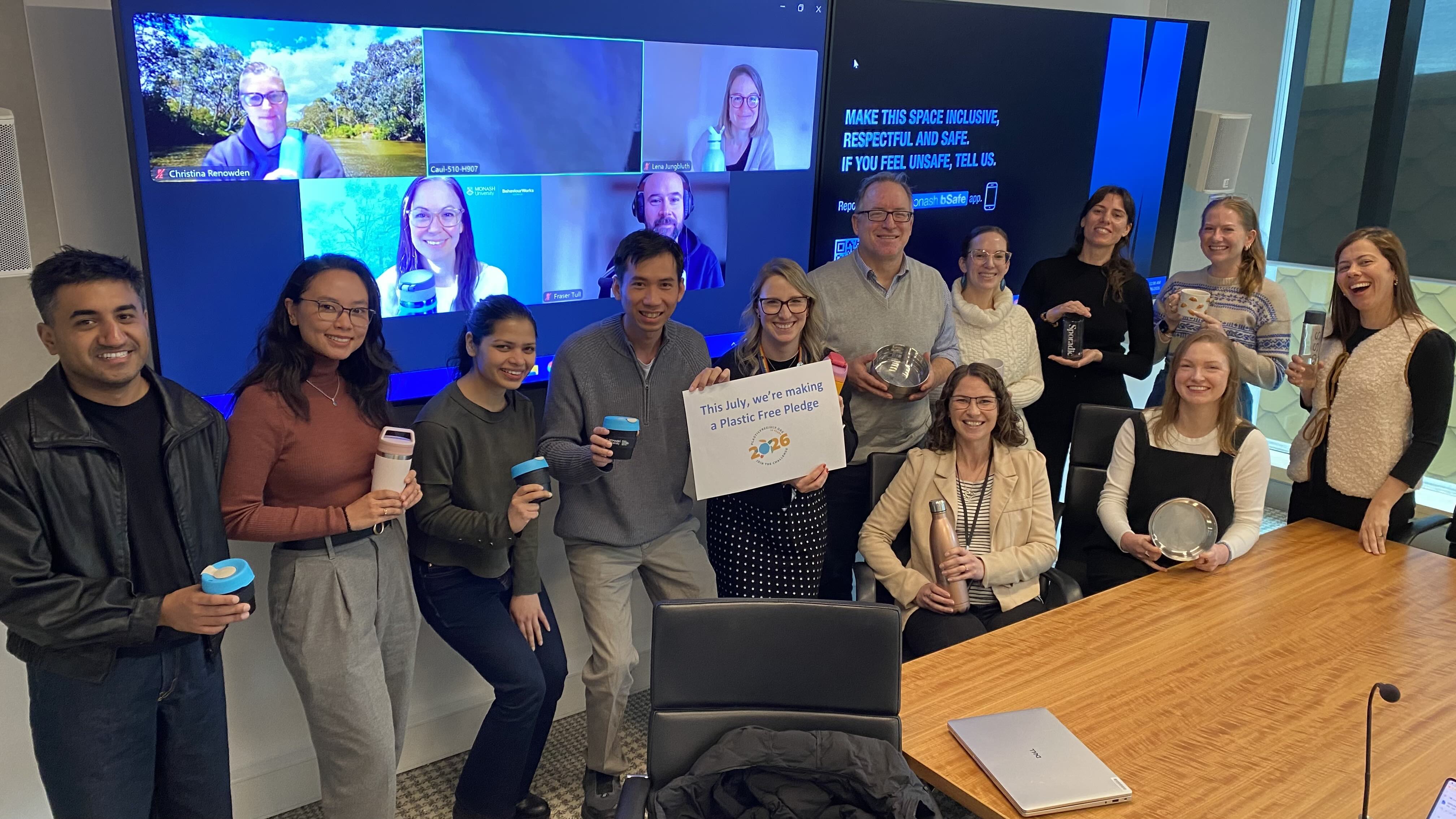
In 2026, BehaviourWorks Australia is working with the Foundation to review the Plastic Free July program and help maximise its impact as a global behaviour change initiative. To put our money where our mouth is, we're also encouraging our team and partners to join the effort by making a pledge on 1 July 2026 to choose one single-use plastic* item to refuse.
It’s very public, totally shareable and there’s some good behavioural science behind it.
The Commitment and Consistency Principle
Robert Cialdini developed 7 principles of persuasion, including Commitment and Consistency. It suggests that we like to behave in a way that aligns with our past choices, promises and stated beliefs. When we make a commitment, we are more motivated to stick to it.
And commitments are most influential when they are:
● Active: The commitment is physical or tangible, like a written statement or clicking a button.
● Public: The commitmentis known to others, raising the social stakes of inconsistency.
● Voluntary: The commitment is made freely, without coercion or bribery.
I solemnly pledge
Let’s apply the principle to Plastic Free July.
Active: In this case, you not only choose a plastic item to refuse, you take that to the pledge page and upload an image of yourself, giving your name, location and item to refuse.
Public: Your details are on the pledge page for the whole world to see. You’re on the record.
Voluntary: No cash prizes or inducements. Just the knowledge that you are making a difference.
Change means doing something different
Behaviour change that requires some cognitive effort – like remembering to bring reusable bags or a keep cup to work – isn’t easy. Plastic in all its forms has become ubiquitous, which is why campaigns like this ask for more than making a mental note. It has to take a little friction to work.
When we see how many others have already taken the pledge, it’s social proof (another principle of persuasion) that others are doing the same thing and that we’re part of a group. And we know that, when it comes to avoiding plastics, it helps to know that others are avoiding them too. Plus, the challenge of setting a world record is a goal we can all get behind.
Are you ready to commit with us? Go on, you’re a couple of clicks away from making a difference…
*Popular choices include bringing your own coffee cup, carrying reusable shopping and produce bags, avoiding plastic-wrapped food, or switching from bottled drinks to refilling reusable water bottles.
Related posts


