




Property Linked Finance model could boost uptake of home energy upgrades
Making home energy upgrades easier to afford for Australians
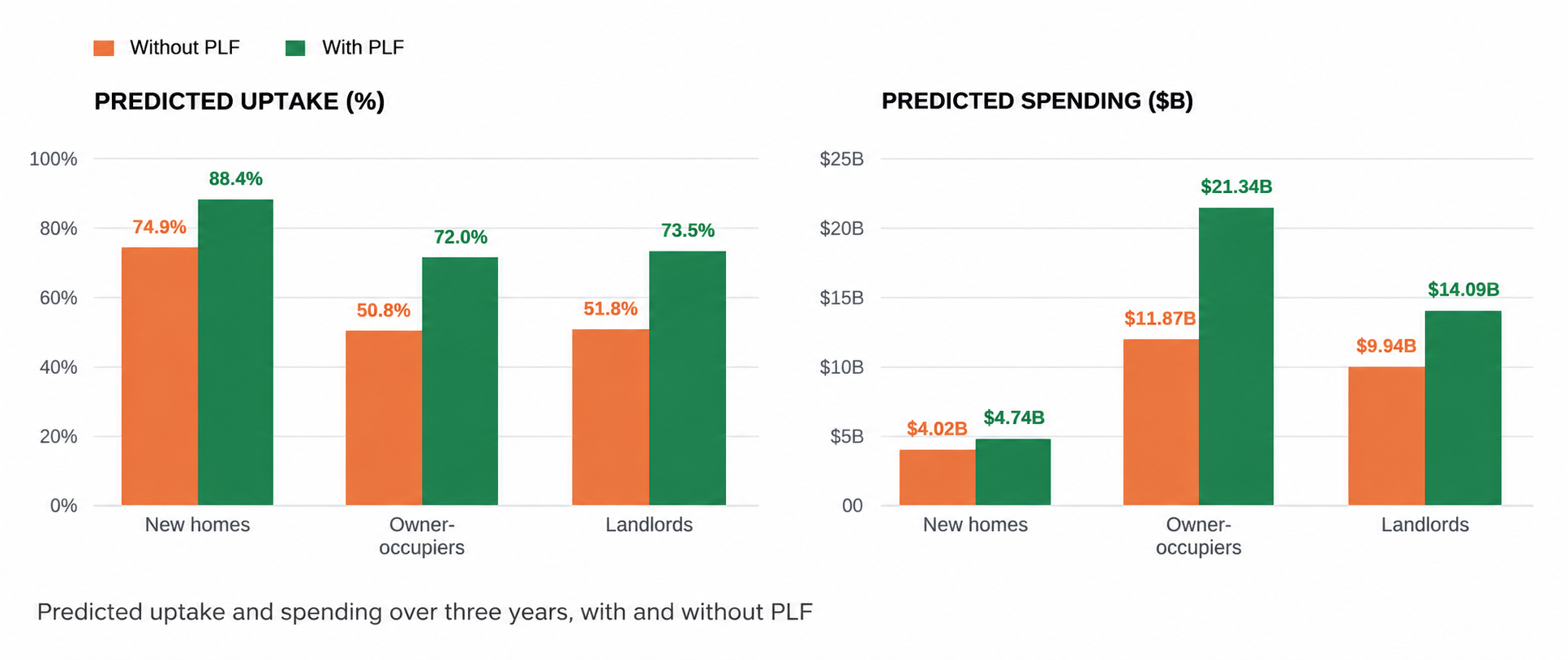
A financing model that allows homeowners to pay for home energy upgrades through a charge linked to their property could generate an additional $14.34 billion in spending on home energy improvements over three years, according to new Monash University research.
Currently, high upfront costs anduncertainty about whether they’ll recover their investment can discourageAustralians from making home energy upgrades, such as installing solar panelsand insulation.
A survey of 2,239 Australians explored attitudes towards Property Linked Finance (PLF), where energy upgrades are financed through a charge linked to their property, not the borrower. If they sell, the remaining repayments can transfer to the new owner.
This concept appealed to about 45 per cent of owner-occupiers, 60 per cent of new home buyers and 50 per cent of landlords. Around 32 per cent of owner-occupiers, 35 per cent of new home buyers and 36 per cent of landlords said PLF would allow them to fund improvements they couldn't otherwise afford upfront.
What is PLF?
The research was conducted by BehaviourWorks Australia at Monash University, in partnership with PLF Accelerator, with funding support from RACE for 2030.
Home energy improvements could include solar panels, efficient electric heating and cooling, insulation, double-glazed windows and heat pump hot water systems.
Market simulations suggested that making PLF available could increase both uptake and spending on home energy improvements among new home buyers, owner-occupiers and landlords already considering upgrades.
However, the study also found that 44 per cent of owner-occupiers, 41 per cent of landlords and 64 per cent of renters were not currently considering home energy improvements, highlighting the challenge of encouraging wider uptake.
How do people feel about PLF?
Lead author Dr Fernanda Mata, from BehaviourWorks Australia (within Monash University’s Faculty of Business and Economics), said upfront costs are a huge challenge.
“Even when upgrades could reduce energy bills over time, finding the money to pay for them can be difficult. Many households already managing high living costs resist taking on additional debt, even when they can see the clear long-term benefit,” Dr Mata said.
“One of the benefits of PLF is that the repayments stay with the property if you sell it. This means homeowners only pay while they own the property and benefit from the improvements, rather than having to pay off the full cost when they move.
“Repayments can also be spread over a longer period, ideally aligned with the lifespan of the improvements, helping households manage the costs over time.”
How can PLF benefit renters?
For rental properties, landlords could use PLF to fund upgrades, with the option of sharing some of the costs with tenants. Almost two-thirds of landlords (66 per cent) said that tenant contributions would make it easier to meet energy-efficiency standards.
Renters were also open to contributing, with 37 per cent saying they would agree to pay a PLF charge for specific upgrades they wanted. A key consideration for renters was whether what they were asked to contribute was justified by the benefits they received, including lower energy costs and improved comfort.
“Renters need to see clear benefits from what they are paying, particularly through lower energy bills and improved comfort. If the contribution is too high compared with the benefits, they are less likely to support it”, Dr Mata said.
What would it take for PLF to take off?
People need clear information abouthow the scheme works, what they’ll pay and what they might save, and how this compares with other upgrade finance models. The process needs to be simple and scalable.
As Liam Smith (Director of BehaviourWorks Australia) says, “Improving the energy efficiency of Australian homes is an important part of reducing emissions and building a more sustainable future, but achieving change at scale requires more than just the right technologies. We also need to rethink how households can access and pay for these improvements.”
Similar finance models to PLF havebeen operating in parts of the United States and Canada for more than a decade, while Scotland is exploring the introduction of this model.
For a summary of the research findings, click here.
Related posts


