



Giving households the power to reduce their power bills
A one-day workshop in helping residents stay comfortable and save on energy costs.
Many of us know that energy bills are expensive, but few of us know why or what we can do about it. BehaviourWorks Australia is looking to change this.
Our latest workshop took us to Armidale in NSW to help EASE Armidale (Energy Advice and Support for Everyone) and Armidale Uniting Church equip their volunteers with ways to help households lower their energy costs and enjoy higher in-home comfort.
The workshop forms part of Energy Upgrades for Australian Homes (EUAH), a national RACE for 2030 CRC project works with councils, community organisations and industry partners to help households access trusted information and support for home energy upgrades.
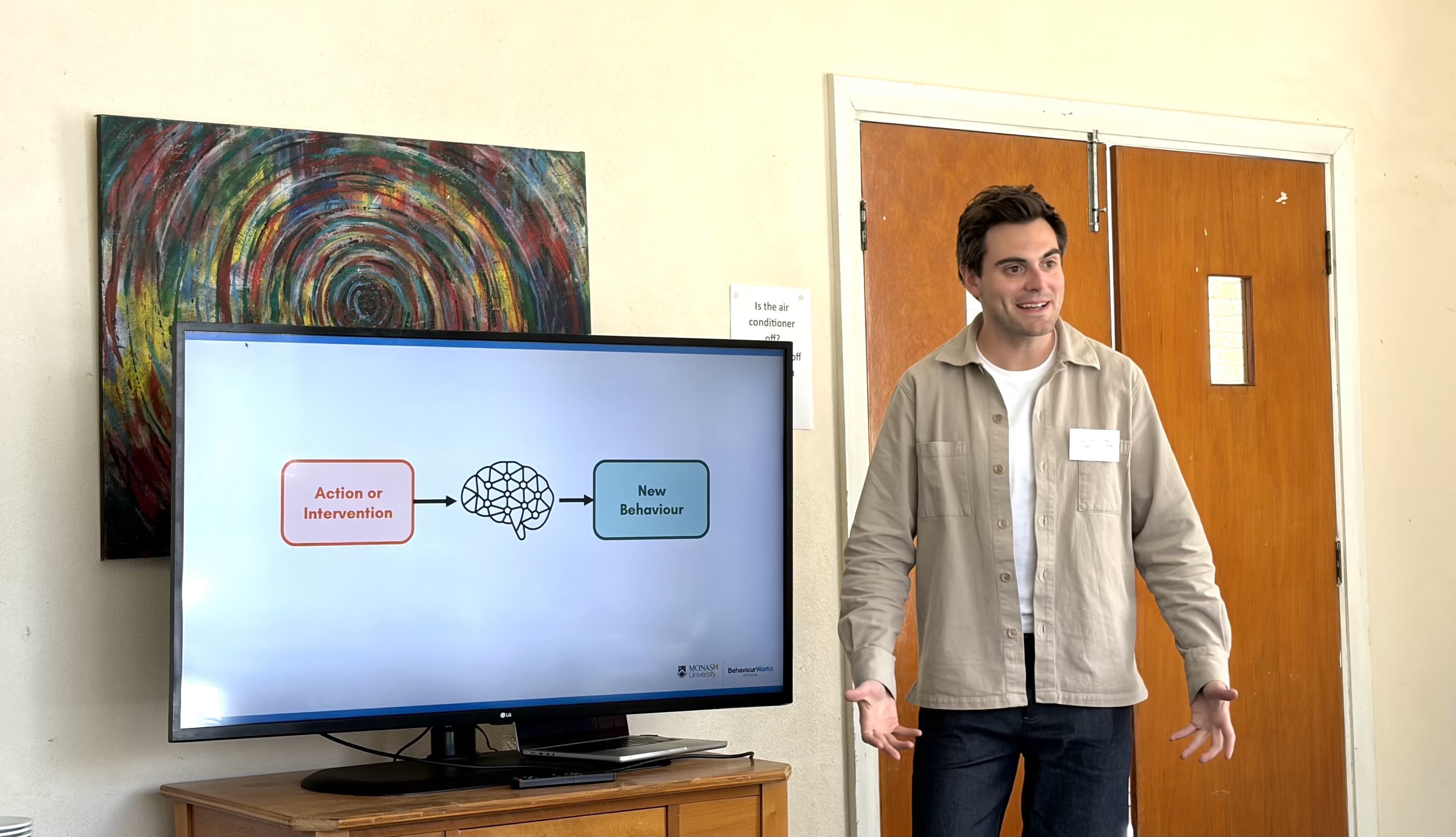
BWA's Liam Smith, Philipe Bujold and Geoff Paine had one day to share some behavioural science insights, test some behaviour change tools and apply some of these learnings through simulated conversations.
Behaviour change in three acts
The behaviour change challenge here is significant; to go out and engage with the Armidale community (particularly low income and vulnerable households) and advise them on practical ways to improve their heating and cooling practises without increasing energy costs. Armidale can experience extremes of temperature, (often sub-zero) so it’s the perfect place to trial this initiative.
There is growing inequity when it comes to accessing energy transition benefits, and programs like this aim to help those already struggling with increased cost of living expenses to undertake small, practical upgrades (eg. draught sealing and targeted insulation) right through to those who can afford heat pumps, rooftop solar and home batteries.
We divided the day into three sections;
· Liam looked at mapping the household journey and volunteer touchpoints,
· Philipe tested some behaviour change tools and techniques, and
· Geoff ran the simulating exercises practising conversations.
Mapping the household journey
Meeting people where they live presents opportunities and barriers. This is where volunteers engage with, listen to and understand household needs. Trust is crucial in these interactions, which is why many of the volunteers are drawn from local networks and social groups. There are also close-knit aboriginal and refugee communities in Armidale (such as the Yazidi and Congolese peoples), requiring specialist knowledge and connection.
We identified many of these groups, as well as the potential barriers to upgrading their homes; financial stress, language, literacy levels, technical access and confidence, landlords, trust, disability and housing quality. So the role these volunteers take is not mainly technical, it’s about listening, communicating and understanding.
Testing the tools
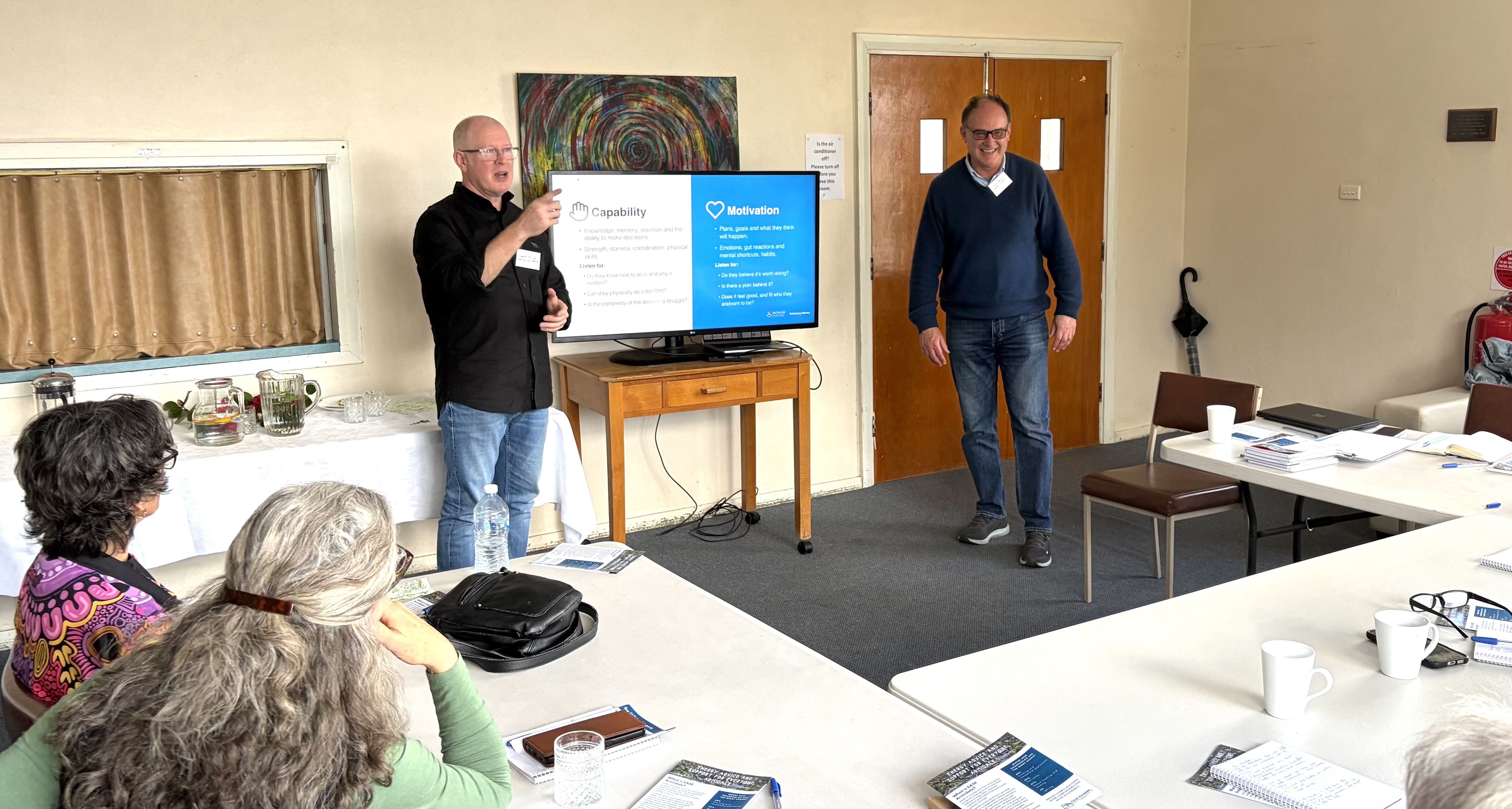
Philipe has been developing a number of behaviour change tools to help identify key aspects of households lifestyles, and the drivers and barriers to home energy upgrades. What messages are appropriate? How do we avoid complexity? What emotions are at play here? Which techniques or interventions should be applied and when?
The online tool Philipe has developed lets volunteers make clear decisions about where householders are coming from, and the best way to proceed. Insights from this work are also helping inform the broader EUAH project approach to support households with home energy upgrades, ensuring advice and resources respond to the real barriers people face when making decisions.
Simulation training
The final segment of the day simulated the kinds of conversations volunteers will have with householders. This is where the theories and tools we have been discussing got applied ‘in action’.
Volunteers learned skills in building rapport and listening, and sometimes, changing their approach. It’s the opposite to door-to-door selling; instead of high-pressure coercion to get someone to sign up, this is about building a supportive, low-pressure interaction. The upgrade may be small. The householder may be hesitant. It’s about identifying where the problems lie and how to suggest improvements.
The workshop take aways
We finished by making commitments going forward (and by sharing them out loud; another behavioural insight). As the program is being developed, the group now have some behavioural tools to help identify which Armidale homes to target, the barriers to making upgrades, and how to begin the conversations with homeowners.
While every household's situation is different, many people face similar challenges when considering energy upgrades: knowing where to start, understanding the options available, and finding information they can trust. Through projects like EASE Armidale, EUAH is exploring how trusted local support, practical advice and accessible resources can help households take action.
We look forward to seeing how the program expands and brings about real change to this community.
Related posts


